
Deputy Minister for Finance, Thomas Nyarko Ampem has called for stronger internal controls across public institutions to prevent financial irregularities and safeguard public funds.
He said effective internal auditing was critical to ensuring that public resources were properly managed and channelled into development priorities under the government’s New Economy agenda.
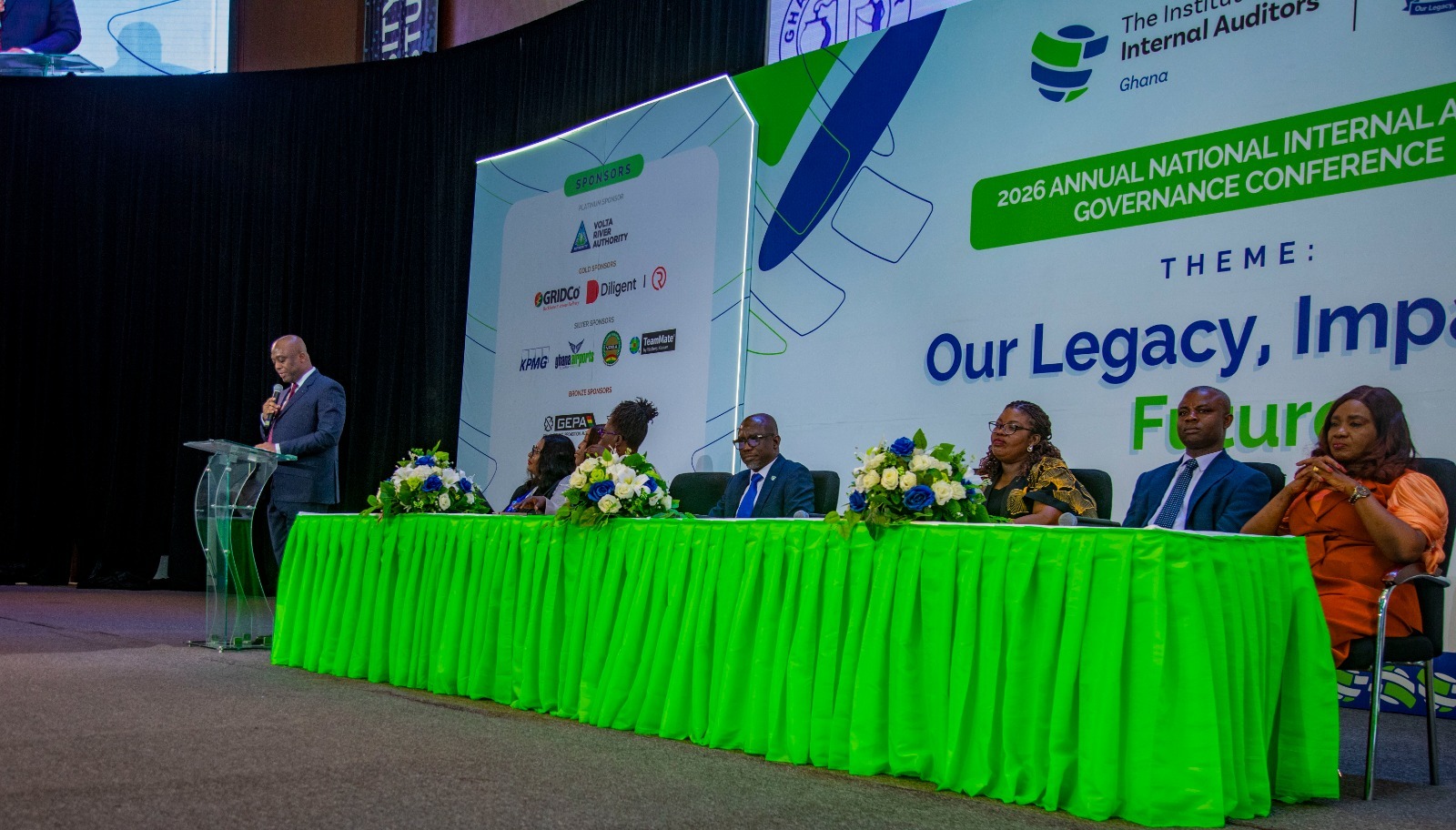
Speaking at the 25th anniversary of the Institute of Internal Auditors Ghana, Mr Ampem said internal auditors must move beyond identifying weaknesses after they had occurred to helping institutions prevent financial losses.
He said Ghana’s development ambitions required significant investments in infrastructure, skills, technology and productive enterprises, making it imperative to protect limited public resources from waste and financial mismanagement.
“Our ambition is to build a more productive, industrialised and resilient economy that creates jobs, adds value to our resources and improves livelihoods,” he said.
“But we cannot mobilise scarce resources for development on one hand and allow them to leak through weak financial controls on the other.”
Mr Ampem, who spoke on behalf of the Minister for Finance, Dr Cassiel Ato Forson, cited figures from the 2025 Auditor-General’s reports showing that financial irregularities across five categories of public institutions declined from approximately GH¢20.72 billion in 2024 to GH¢7.69 billion in 2025, representing a 62.9 per cent reduction.
He welcomed the decline but said the remaining irregularities demonstrated the need for sustained efforts to strengthen accountability and improve public financial management.
“A 62.9 per cent reduction is progress. GH¢7.69 billion in remaining irregularities is a reminder that the job is far from finished,” he said.
The Deputy Minister also highlighted findings from the audit of government’s legacy arrears and payables, which saw GH¢8.1 billion out of GH¢68.7 billion in claims submitted for verification rejected.
He said the rejected claims included those with inadequate supporting documentation, duplicate claims, falsified receipts and claims for work not done.
“The lesson is that it is better to stop an improper payment before it is paid than to spend years trying to recover it,” he said.
Mr Ampem urged internal auditors to strengthen their scrutiny of procurement processes, payroll systems and major public investments to identify risks early and prevent the misuse of public funds.
He called for the adoption of data analytics, digital tools and continuous risk assessment, stressing that digitalisation must be supported by professional competence, institutional independence and management accountability.
He also urged heads of institutions to empower internal auditors, protect their independence and act promptly on audit recommendations rather than allow the same weaknesses to recur.
The success of the government’s New Economy agenda, he noted would depend not only on the resources mobilised but also on how effectively they were safeguarded and utilised.
“We cannot build a New Economy with old habits of waste, weak controls and avoidable financial losses,” he said.